Compensation & Reward Insights

Should Future Potential Change Today’s Pay?
RewardEdge Daily Insights

Should Future Potential Change Today’s Pay?

Should future potential influence current pay? This edition of RewardEdge Daily Insights examines the boundary between talent forecasts, job value, current contribution and compensation. It reviews research on high-potential assessment, promotion, fairness and Reward design, and introduces the RewardEdge Potential-to-Pay Translation Test to help organisations decide when future potential should influence today’s financial decisions.
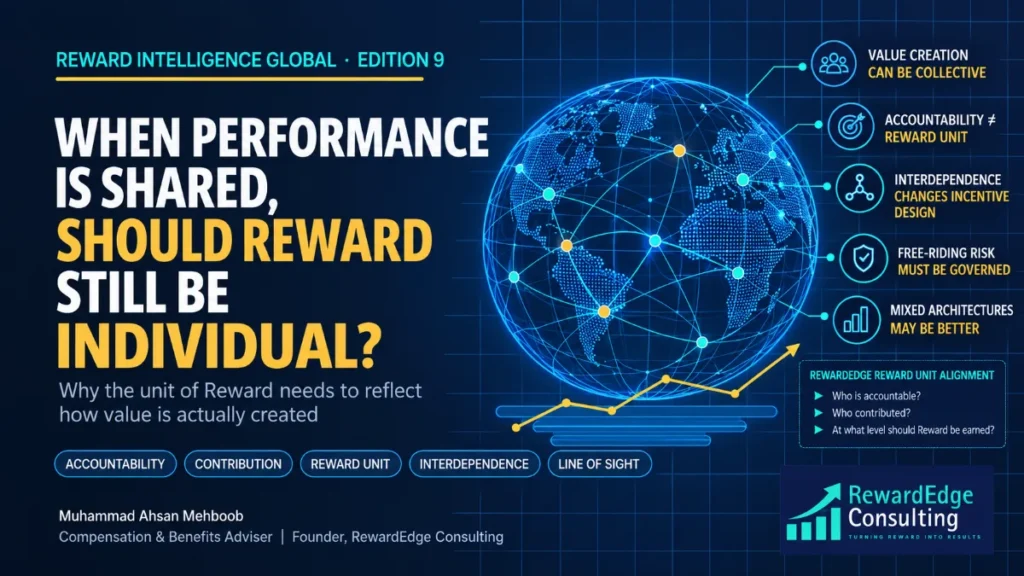
When performance is shared, should Reward still be individual?
Reward Intelligence Global

When performance is shared, should Reward still be individual?

When performance is shared across teams, functions and business units, should financial Reward still remain primarily individual? This edition introduces Reward Unit Alignment, a practical framework for determining where incentives should sit based on value creation, task interdependence, contribution separability, line of sight, free-riding risk and governance. It examines current research, field evidence and practical implications for designing individual, team, enterprise and mixed Reward architectures.

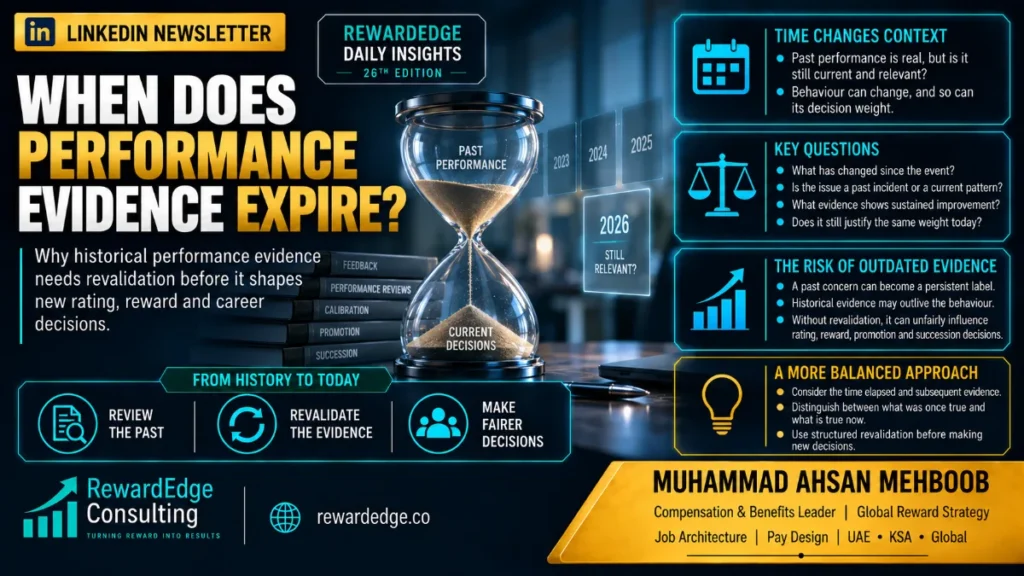
When Does Performance Evidence Expire?
RewardEdge Daily Insights

When Does Performance Evidence Expire?

Historical performance evidence may remain factually true while its relevance to a new decision changes. This RewardEdge Daily Insights edition examines when older feedback, incidents and performance concerns should be revalidated before influencing ratings, salary, promotion, succession or Reward decisions. It introduces the RewardEdge Performance Evidence Freshness Review to assess relevance, evidence age, correction, recurrence, counter-evidence, severity and documentation integrity.

When Manager Performance Rewards Results but Misses Capability
RewardEdge Daily Insights

When Manager Performance Rewards Results but Misses Capability

Managers are expected to deliver today while building the capability needed for tomorrow. Yet most performance systems measure operating results far more clearly than judgement transfer, delegation, succession depth and reduced dependency. This edition examines the evidence behind that imbalance and introduces the RewardEdge Manager Capability Output Test, a practical diagnostic for assessing both current delivery and the capability a manager leaves behind.

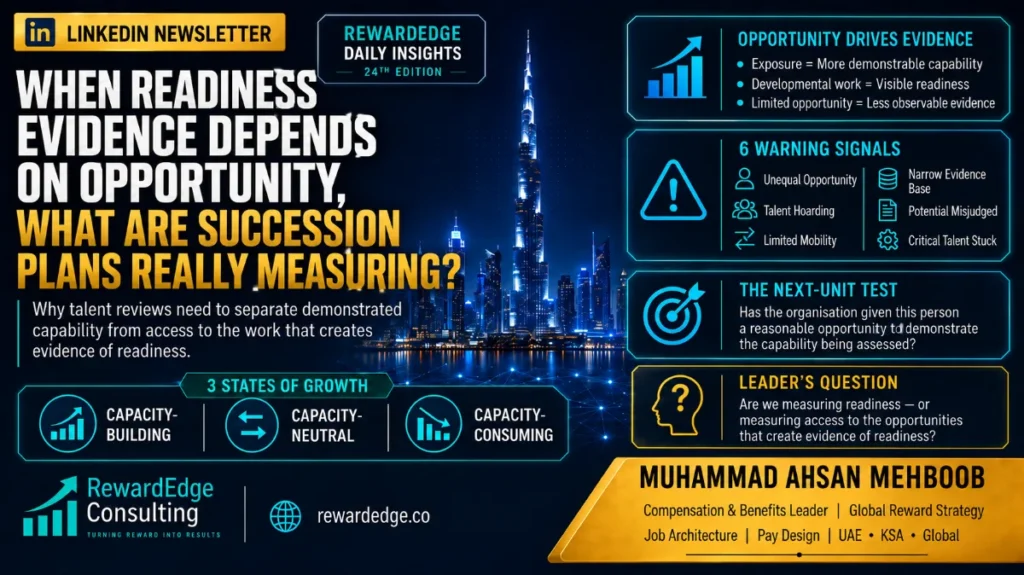
When Readiness Evidence Depends on Opportunity, What Are Succession Plans Really Measuring?
RewardEdge Daily Insights

When Readiness Evidence Depends on Opportunity, What Are Succession Plans Really Measuring?

Succession planning depends on evidence, but that evidence is not created in a vacuum. Developmental assignments, internal mobility, manager decisions and access to consequential work all influence what employees have the opportunity to demonstrate. This edition examines the difference between “not demonstrated”, “not capable” and “not sufficiently exposed”, and introduces the RewardEdge Readiness Evidence Access Review to strengthen succession governance.

When New Priorities Arrive, What Actually Stops?
RewardEdge Daily Insights

When New Priorities Arrive, What Actually Stops?

When leaders add a new strategic priority without stopping, pausing, sequencing or resourcing existing work, the trade-off often shifts to employees. This edition examines the evidence on task switching, goal conflict and multi-project overload, then introduces the RewardEdge Priority Admission Test: a practical framework for deciding what changes when something new enters the portfolio. It also explores implications for Reward, job architecture and leadership governance.

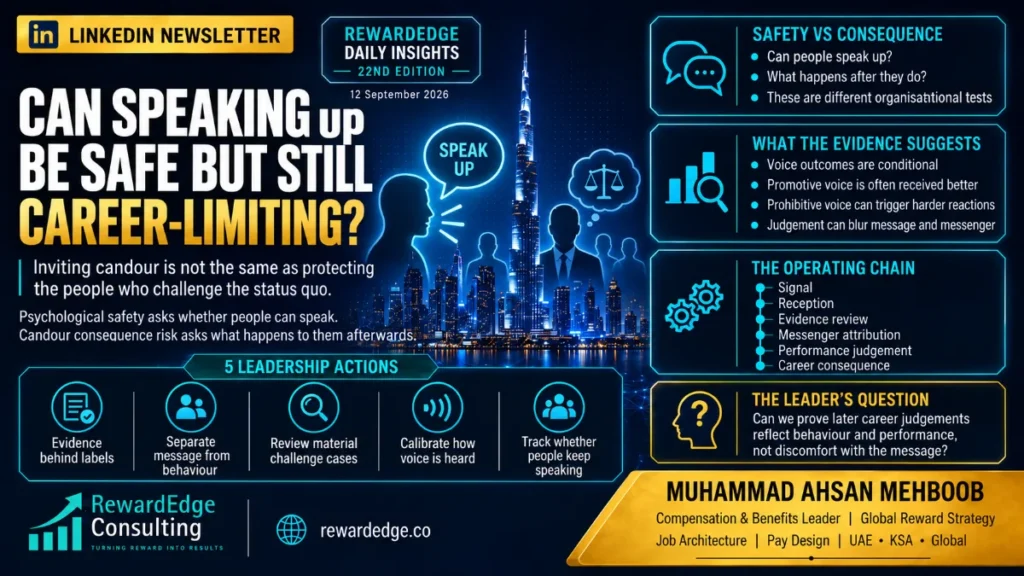
Can Speaking Up Be Safe but Still Career-Limiting?
RewardEdge Daily Insights

Can Speaking Up Be Safe but Still Career-Limiting?

Psychological safety may help employees speak up, but what happens afterwards? This edition examines how constructive challenge can influence performance, reputation, promotion and sponsorship—and why organisations must separate the message from the messenger. Drawing on research into employee voice, promotability and managerial response, it introduces the RewardEdge Candour Consequence Risk framework for stronger performance, talent and reward governance.

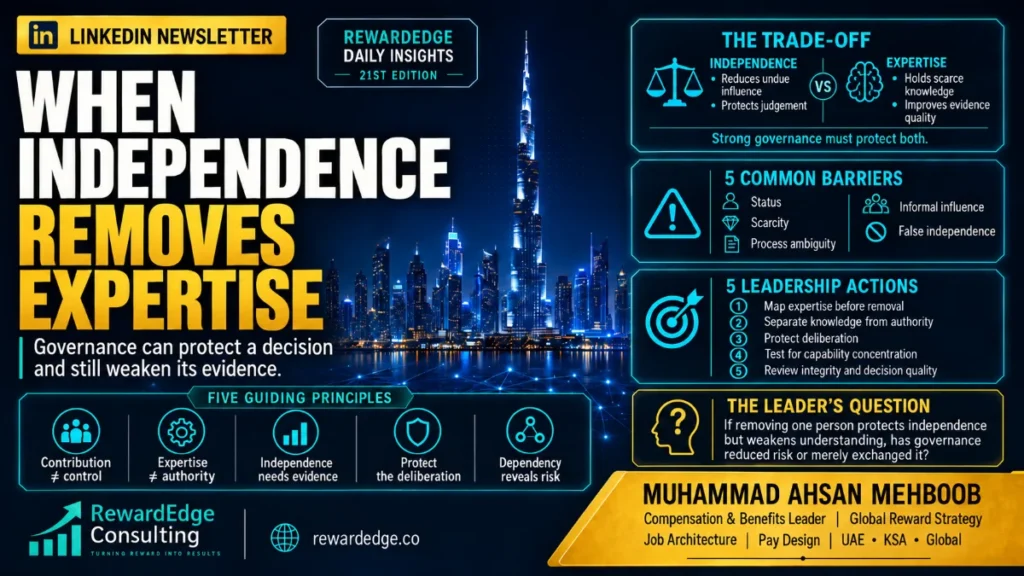
When independence removes expertise
RewardEdge Daily Insights

When independence removes expertise

Conflict controls can protect decision independence, but what happens when the person being constrained also holds expertise the decision genuinely needs? This edition examines the expertise-independence trade-off and why contribution should not be confused with control. It introduces the RewardEdge Expertise Preservation Test to help leaders protect decision integrity without creating evidence loss or exposing deeper organisational dependency.

WHEN A CONFLICT IS DECLARED, HAS THE DECISION REALLY BEEN PROTECTED?
RewardEdge Daily Insights

WHEN A CONFLICT IS DECLARED, HAS THE DECISION REALLY BEEN PROTECTED?

Declaring a conflict of interest makes the risk visible, but does it protect the decision? Edition 20 examines the Conflict Influence Gap: the distance between formal disclosure and effective control of influence across the decision process. It explores how evidence, criteria, recommendations, information access and decision rights can shape outcomes before final approval, and introduces the RewardEdge Conflict Influence Control Test for stronger, proportionate governance.

When does pay compression become a workforce risk?
Reward Intelligence Global

When does pay compression become a workforce risk?

Pay compression does not automatically signal poor Reward design. The real risk begins when narrowing pay relationships lose economic meaning, persist without clear rationale, or start influencing retention, progression, internal mobility and leadership decisions. Edition 8 explores the causes of compression, why rational pay decisions can create unintended outcomes, and introduces the RewardEdge Compression Risk Test for determining when intervention is justified.

When should an artificial intelligence skills premium become part of base pay?
RewardEdge Daily Insights

When should an artificial intelligence skills premium become part of base pay?

Artificial intelligence skills are attracting meaningful market premiums, but a market premium does not automatically belong in permanent base pay. This edition examines how Reward leaders can distinguish temporary scarcity from sustained job requirements, separate individual capability from job value, and choose the right pay mechanism. It introduces the RewardEdge Premium Migration Test for deciding when a temporary AI skills premium should become part of long-term salary architecture.

Scroll to Top