

HR Policy Framework: How to Build One in 6 Steps
HR policy framework in 6 steps: document hierarchy, owners and approvers, review cycles and a standard template, with two published university models.
HR policy framework in 6 steps: document hierarchy, owners and approvers, review cycles and a standard template, with two published university models.

Broadbanding in practice: bands vs grades, what the evidence shows, and 6 steps to make wide pay bands work, with zones and market reference points.

Payroll reconciliation in 6 monthly checks: headcount, gross pay, bank, general ledger, WPS and GOSI filings and end-of-service, with key controls.

Job leveling in 6 steps: career streams, number of levels, leveling factors, level descriptors and mapping to grades, with Purdue and Fordham examples.
How to benchmark salaries: define your market, match jobs on content, choose data sources, age the data and use the median, with GCC pay checks.

How UAE gratuity is calculated under Article 51: 21 and 30 days’ basic wage, the 1-year rule, two-year cap, 14-day deadline and a worked example.
How to write a reward strategy in 6 steps: principles, market positioning, total reward mix, structures and governance, with two published examples.
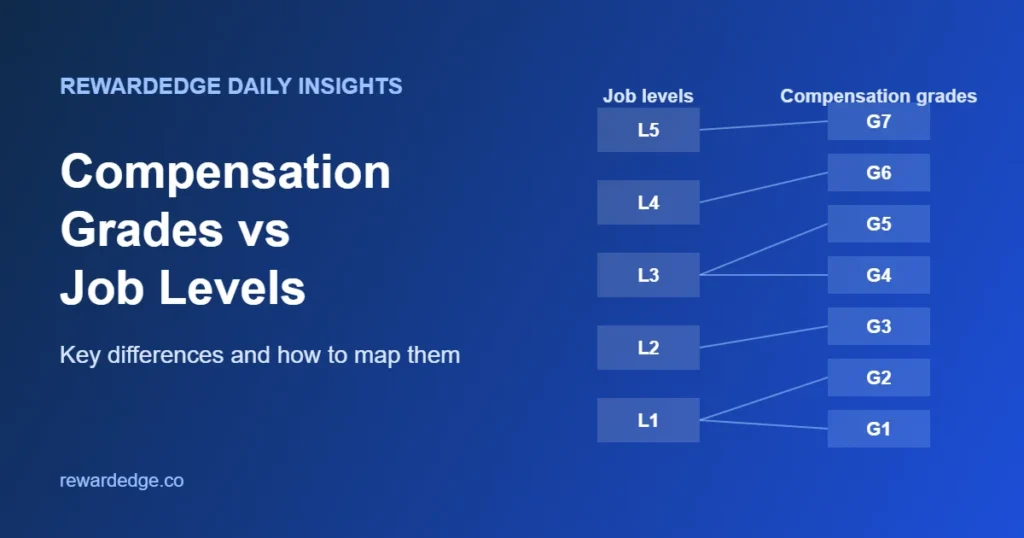
Compensation grades vs job levels: what each one means, the key differences, three ways to map levels to grades, and where job banding fits.

How to build a salary increment matrix: set the budget, choose the axes, fill and cost the merit matrix, add guardrails, plus GCC payroll points to check.
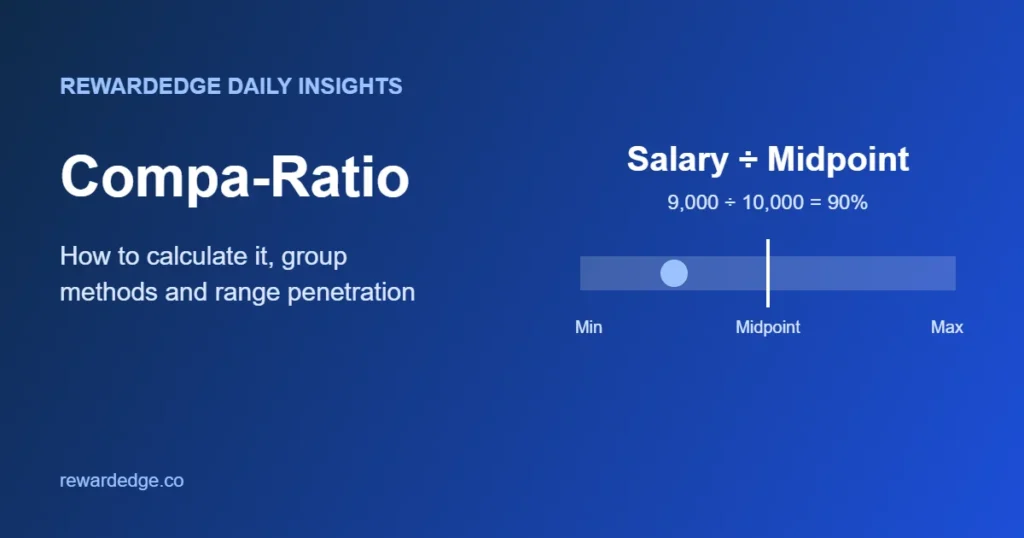
Compa-ratio explained: how to calculate it for individuals and groups, weighted vs simple averages, compa-ratio vs range penetration, and common mistakes.
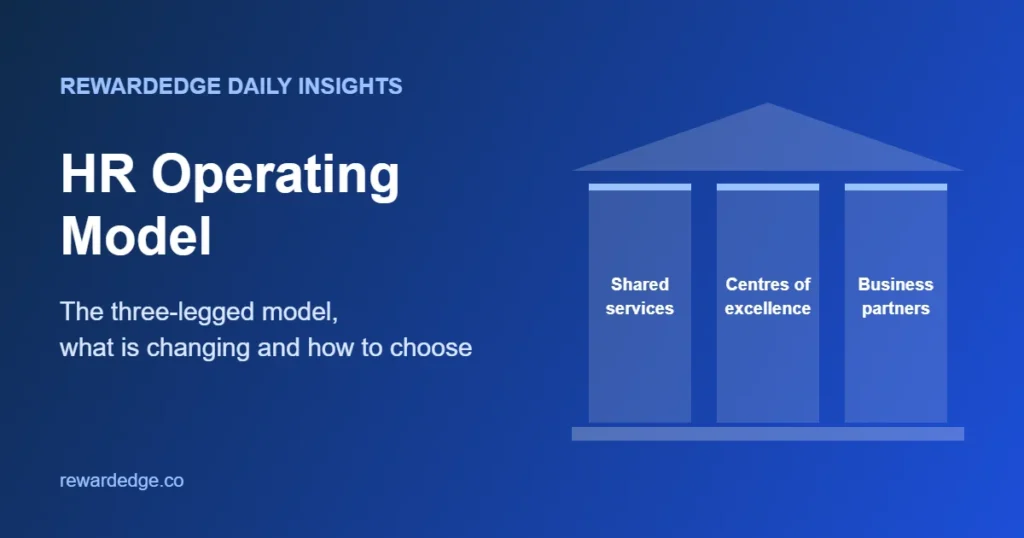
HR operating model explained: the three-legged model of shared services, centres of excellence and business partners, where it struggles and how to choose.
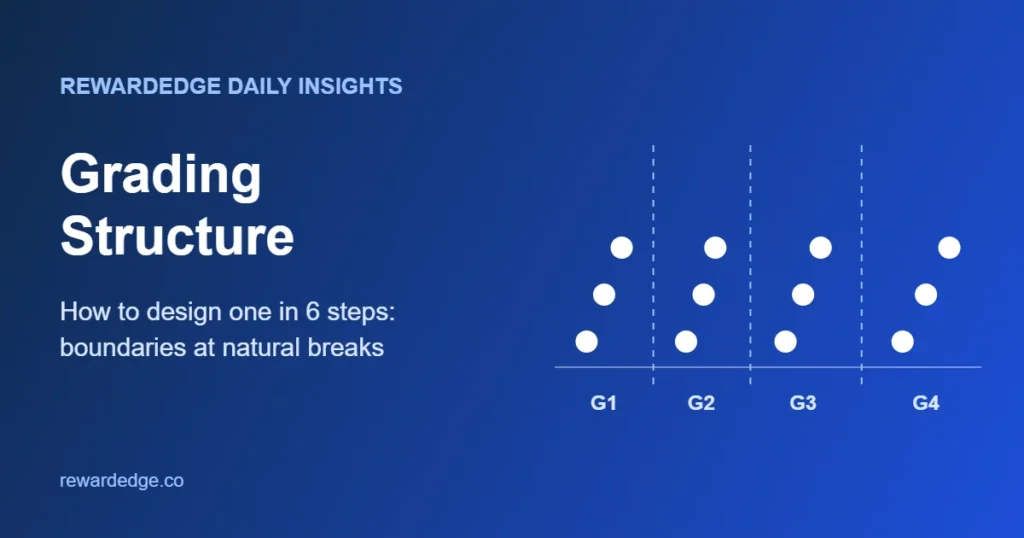
How to design a grading structure in 6 steps: job evaluation, number of grades, boundaries at natural breaks, slotting, pay ranges and assimilation rules.